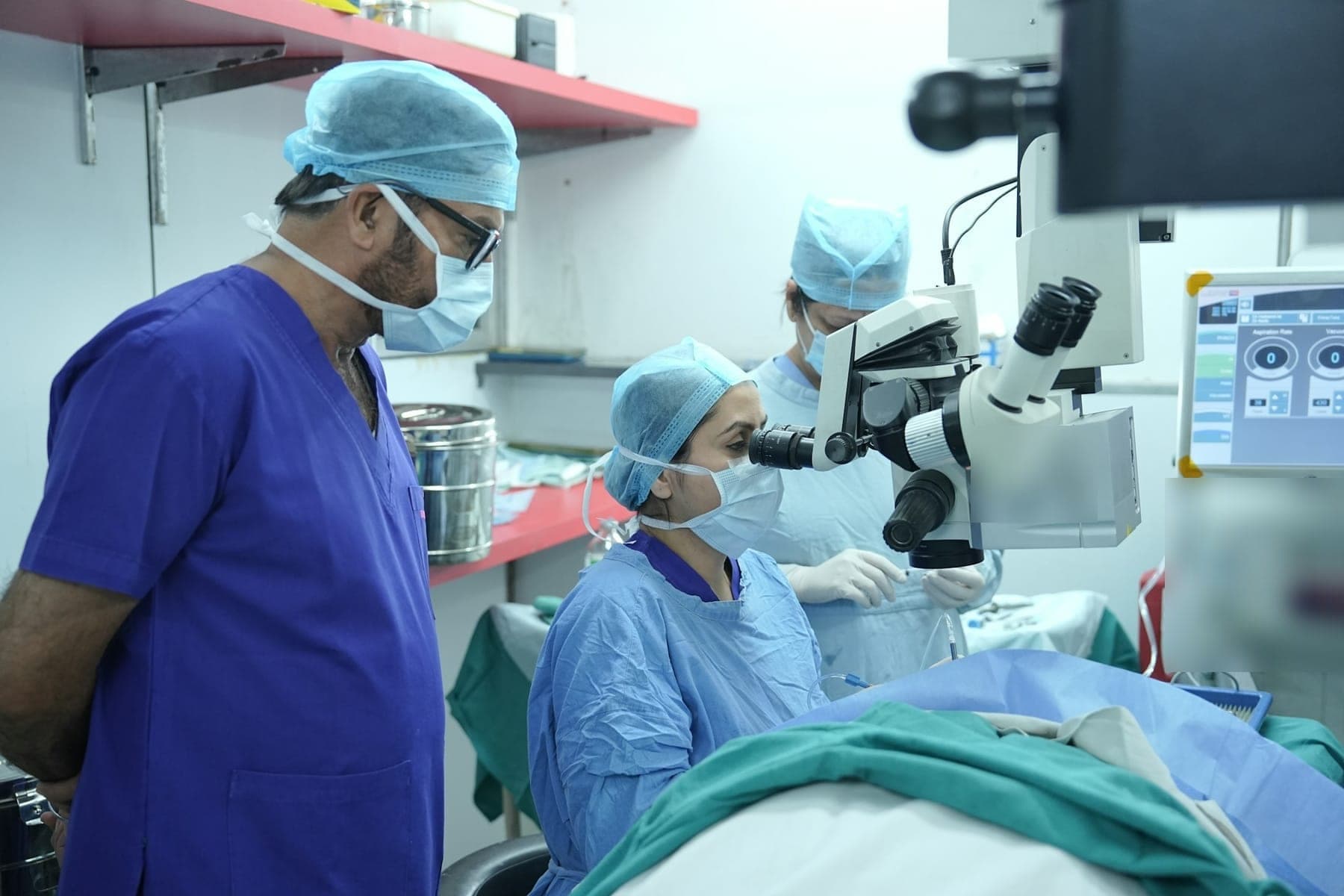
Overview
About Oculoplasty
Common conditions include droopy eyelids (ptosis), inward- or outward-turning eyelids, excess eyelid skin affecting vision, eyelid lumps, watery eyes from blocked tear ducts, and thyroid eye disease.
The focus is on protecting the eye and improving function, while respecting natural appearance.
Reasons to consult
Common symptoms & reasons for a visit
- A drooping upper eyelid that obstructs vision
- Eyelids turning inwards (lashes rubbing) or outwards
- Persistent watery eye
- A lump or lesion on the eyelid
- Bulging eyes or eyelid retraction
Diagnosis
How the condition is evaluated
- 01
Eyelid measurements
Assesses eyelid position, function and symmetry.
- 02
Tear duct assessment
Checks whether the drainage system is blocked.
- 03
Orbital imaging (if needed)
Scans of the eye socket for selected conditions.
Treatment
Available treatment approaches
Ptosis repair
Tightening or reattaching the eyelid-lifting muscle.
Eyelid malposition surgery
Correcting entropion and ectropion to protect the eye.
Tear duct surgery
Procedures such as dacryocystorhinostomy (DCR) to restore drainage.
Eyelid lesion removal
Excision with reconstruction and, where needed, laboratory analysis.
The right approach depends on an individual examination. This page does not provide a diagnosis or guarantee any outcome.
Your visit
What patients can generally expect
- Most procedures are performed under local anaesthetic as day cases.
- Bruising and swelling usually settle over one to two weeks.
FAQs
Frequently asked questions
Oculoplastic surgery is primarily functional, for example when a droopy eyelid blocks vision or an eyelid turns inward. Your surgeon will explain the purpose and expected result of any procedure.
Specialists
Related specialists
 Sample
MBBS · MS (Ophthalmology) · Fellowship, Oculoplasty & Orbit
Oculoplasty & Orbit
Dr. Rohan Kapoor
Consultant Oculoplastic Surgeon
MBBS, MS (Ophthalmology), Fellowship, Oculoplasty & Orbit
13+ yrs experience
View profile
Medical review notice: This page contains general, informational content for a demonstration website. It must be reviewed and approved by qualified ophthalmologists before real-world publication.