Overview
About Cataract Surgery
Cataracts most commonly develop with age, but they can also be associated with diabetes, long-term steroid use, previous eye surgery, eye injury or, rarely, be present from birth.
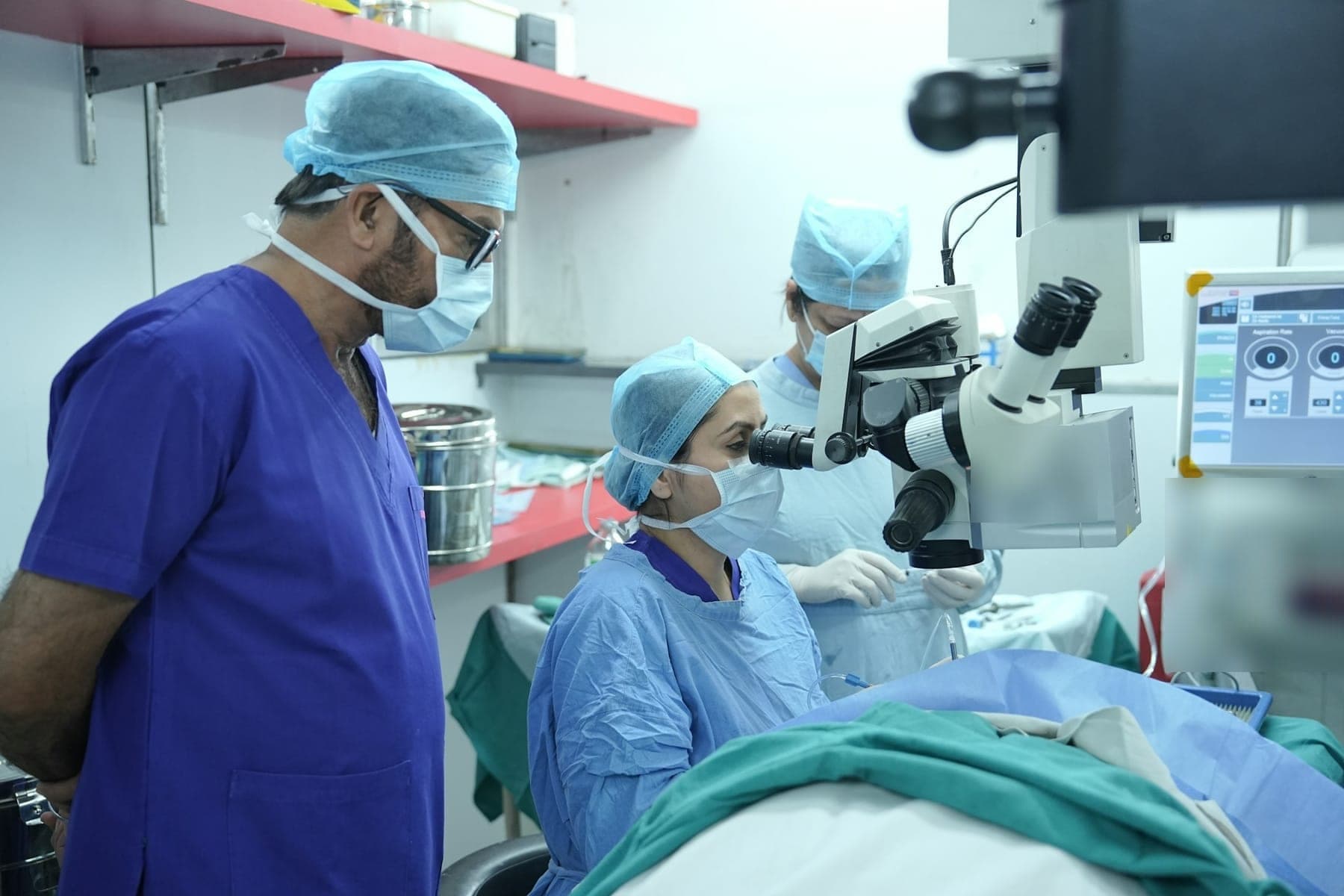
Modern cataract surgery is usually performed as a day procedure under local anaesthetic. The clouded lens is removed, most often using phacoemulsification, and replaced with an intraocular lens (IOL) selected after careful measurement of the eye.
Choosing the right lens is a shared decision. Your surgeon will discuss monofocal, toric (astigmatism-correcting) and extended-range or multifocal options where appropriate, along with the realistic benefits and trade-offs of each.
Reasons to consult
Common symptoms & reasons for a visit
- Blurred, cloudy or dim vision
- Increasing glare or halos around lights, especially at night
- Colours appearing faded or yellowed
- Frequent changes in spectacle prescription
- Difficulty reading or driving despite updated glasses
Diagnosis
How the condition is evaluated
- 01
Visual acuity & refraction
Measures how clearly you see and whether glasses still help.
- 02
Slit-lamp examination
A magnified view of the lens to grade the type and density of cataract.
- 03
Optical biometry
Precise measurements of eye length and corneal curvature used to calculate lens power.
- 04
Retina & macula assessment
Dilated examination and, where needed, OCT imaging to check for other conditions that may affect outcomes.
Treatment
Available treatment approaches
Monitoring & updated spectacles
Early cataracts that do not yet limit daily life may simply be observed, with prescription changes as needed.
Phacoemulsification
Ultrasound energy gently breaks up the lens through a small incision, which typically does not require stitches.
Intraocular lens options
Monofocal, toric and extended-depth-of-focus lenses are matched to eye measurements and lifestyle goals.
Post-operative care
A course of eye drops and scheduled follow-up visits to monitor healing and finalise spectacle needs.
The right approach depends on an individual examination. This page does not provide a diagnosis or guarantee any outcome.
Your visit
What patients can generally expect
- Surgery is usually a day procedure, and most patients return home the same day with a protective shield.
- Vision often begins to improve within days, although full stabilisation can take several weeks.
- Many people still need glasses for some tasks; your surgeon will explain what to expect for your lens choice.
- As with any surgery, there are risks. These will be discussed in detail during your consultation.
FAQs
Frequently asked questions
Surgery is generally considered when a cataract interferes with activities that matter to you. There is rarely a need to wait until a cataract is 'ripe', and your ophthalmologist will help you weigh timing against your daily needs.
Specialists
Related specialists
 Sample
MBBS · MS (Ophthalmology) · Fellowship, Cataract & Refractive Surgery
Cataract & Refractive Surgery
Dr. Arjun Mehra
Consultant Ophthalmologist
MBBS, MS (Ophthalmology), Fellowship, Cataract & Refractive Surgery
16+ yrs experience
View profile Sample
MBBS · FRCOphth (sample credential)
Comprehensive Ophthalmology
Dr. Claire Whitmore
Medical Director (Sample)
MBBS, FRCOphth (sample credential)
22+ yrs experience
View profile
Medical review notice: This page contains general, informational content for a demonstration website. It must be reviewed and approved by qualified ophthalmologists before real-world publication.